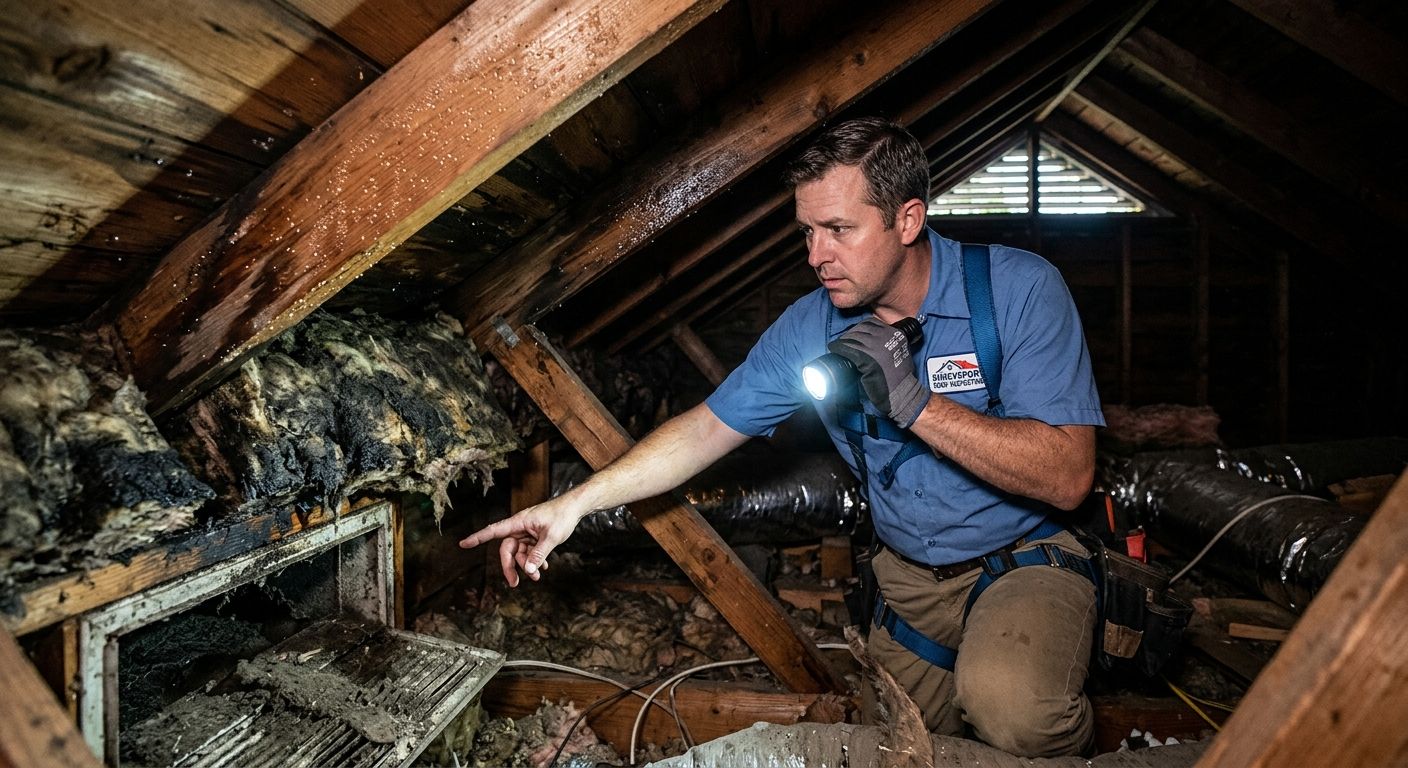
Proper attic airflow is essential for regulating temperature and moisture in your home, but hidden roof ventilation problems symptoms in Shreveport can quietly lead to costly structural issues. When a roof can’t breathe, heat and humidity build up, accelerating shingle wear, warping decking, and inviting mold. At Triumph Roofing and Construction, we often find that what appears to be a minor leak or peeling paint is actually a ventilation failure that has been stressing the roof assembly for months.
Shreveport’s humid subtropical climate makes these symptoms more common here than in drier regions. High outdoor humidity, combined with interior moisture from daily activities, needs a continuous air path to escape. If soffits are clogged or baffles are over-insulated, the system stalls and moisture accumulates. With over 20 years of local experience, we know how to spot these warning signs early and distinguish them from isolated storm damage or aging materials.
Once you spot these symptoms, a free roof inspection can confirm the cause and guide next steps. For a thorough evaluation of your ventilation issues, explore roof services in Shreveport from Triumph Roofing and Construction. Our no-obligation assessment provides a clear diagnosis and practical options, helping you protect your home before minor venting troubles turn into major repairs.
Understanding roof ventilation problems symptoms is essential for Shreveport homeowners seeking to protect their property. In our region, proper attic ventilation is the strategic exchange of air that regulates temperature and moisture levels between your attic space and the outdoor environment. Without this balance, warm, humid air trapped in the attic can condense on cooler surfaces during seasonal shifts, creating conditions that lead to wood rot, mold growth, and insulation degradation. For our local climate, where humidity often exceeds 70 percent, effective ventilation is not merely a structural feature—it is a critical defense against the persistent moisture pressure that threatens the integrity of your roofing system.
Roof ventilation problems occur when your attic lacks the proper intake and exhaust airflow needed to maintain a dry and temperate environment. In a well-ventilated attic, cooler outside air enters through soffit vents while warmer, moisture-laden air exits through ridge or roof vents, creating a continuous cycle. When this system fails, heat and humidity accumulate. According to Triumph Roofing and Construction, a Shreveport-based provider with over 20 years of experience serving Northwest Louisiana, the region’s humid subtropical climate creates constant moisture pressure that makes adequate ventilation a year-round necessity. Many Shreveport homeowners discover that the indicators of poor attic ventilation are subtle at first but can escalate into costly roof damage if left unaddressed. We recommend a free roof inspection to assess your home’s specific airflow needs.
Recognizing the warning signs of inadequate venting early can prevent extensive structural damage. If your attic is not breathing properly, you may observe the following symptoms of improper attic airflow:
If you notice any of these issues, contact a roofer in Shreveport for a thorough inspection. Our team provides detailed photo reports that document all deficiencies, helping you understand the scope of work required. At Triumph Roofing and Construction, customer satisfaction is at the heart of our business, and we are ready to guide you through the next steps.
The causes of poor attic ventilation in our area often stem from the interaction between Shreveport’s harsh climate and common construction shortcomings. A primary culprit is soffit vents that have been blocked by attic insulation, debris, or fresh exterior paint, cutting off the essential intake airflow that powers the entire ventilation system. Additionally, many older homes in Shreveport were built to outdated codes that required minimal ventilation, leaving them especially vulnerable today. Improperly sized or installed ridge vents may fail to create enough exhaust capacity, while the absence of a continuous vapor barrier allows daily moisture from cooking, bathing, and ambient humidity to migrate upward and saturate insulation.
As stated by Triumph Roofing and Construction, addressing these root causes requires a comprehensive understanding of local building conditions and the Louisiana State Licensing Board standards that govern corrective work. We observe that many homes benefit from the installation of durable, wind-resistant shingles from GAF or Owens Corning, paired with a balanced ventilation design that can help reduce moisture accumulation. Identifying these issues early can save you from more extensive damage—a qualified roofer can assess your specific situation. Are you ready to experience exceptional roofing service firsthand, have questions, or want to request more information or an estimate today? Contact Triumph Roofing and Construction at 318-674-PROS (7767).
For Shreveport homeowners, a well-ventilated attic is not just a structural feature; it is a critical defense against our region’s intense heat and humidity. Recognizing roof ventilation problems symptoms early, such as soaring upstairs temperatures or unexplained moisture in the attic, can save you from costly repairs down the line. Proper ventilation creates a continuous flow of air that protects your home from the inside out. We at Triumph Roofing and Construction see firsthand how this simple system delivers three transformative benefits for local properties.
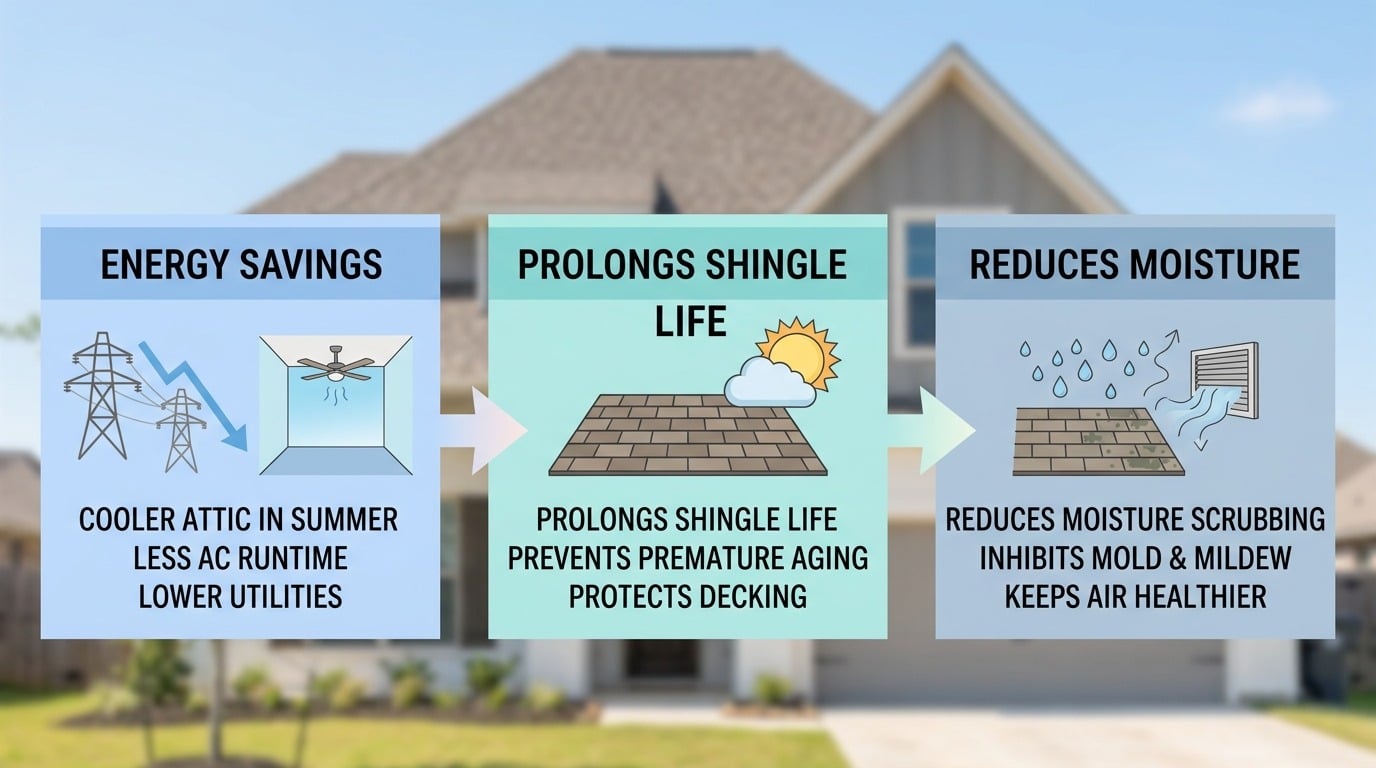
Effective roof ventilation significantly reduces attic temperatures, which can skyrocket during our long Louisiana summers. By allowing superheated air to escape, a balanced ventilation system can lower attic temperatures by 30 to 50 degrees Fahrenheit. This means your air conditioning system does not have to work as hard to keep your living spaces cool, directly translating to lower monthly energy bills. Beyond the savings, you will also notice improved comfort with more consistent temperatures from room to room. Upstairs areas that were once stubbornly hot become far more livable, eliminating the common frustration of a home that never feels evenly cooled. When you eliminate these common signs of poor ventilation, your entire home becomes a more comfortable sanctuary from the Shreveport heat.
Excessive heat and moisture trapped in a poorly ventilated attic can effectively bake your roofing materials from the inside out. For a city like Shreveport, where the sun beats down relentlessly, this premature aging is a major concern. Proper ventilation helps expel this trapped heat, which in turn can prevent asphalt shingles from curling, cracking, and losing their protective granules far sooner than expected. By mitigating this thermal stress, a well-designed ventilation system can extend the life of your roof by 20 to 30 percent. This means your roof investment is protected for the long haul, delaying the need for a costly replacement. Our team can assess your current ventilation setup as part of a free roof inspection to identify any issues that might be shortening your roof’s lifespan.
In our humid Shreveport climate, daily activities like cooking, showering, and even breathing introduce significant moisture into your home, which eventually travels to the attic. Without proper airflow, this moisture condenses on the underside of the roof deck, leading to a cascade of serious problems. The damp environment becomes a breeding ground for mold and mildew, which can compromise the structural integrity of wooden rafters and sheathing through rot. Furthermore, saturated insulation loses its effectiveness, or R-value, meaning your home loses conditioned air faster. A correctly balanced intake and exhaust ventilation system actively sweeps this moisture-laden air out before it can cause damage. By proactively solving ventilation issues, you protect not only your roof but the health and structure of your entire home.
At Triumph Roofing and Construction, we understand that a roof is more than just shingles and decking – it is a complete system. Proper attic ventilation is one of the most critical yet frequently overlooked components of a durable roof. When airflow is insufficient, the consequences can be severe, leading to a range of roof ventilation problems symptoms that compromise the integrity of your entire home. Recognizing these signs early can help prevent costly, long-term damage.
The principle driving effective attic ventilation is a natural process known as the stack effect. This passive system creates a continuous cycle of airflow without any mechanical assistance. It begins with cool, fresh air entering the attic through intake vents, which are typically installed in the soffits under the eaves. As this air warms inside the attic space, it naturally rises and exits through exhaust vents positioned near the roof’s peak, such as ridge vents. This constant exchange of air is essential for regulating temperature and moisture.
For this system to function, it must be balanced. The intake and exhaust ventilation areas should be roughly equal to ensure steady, unimpeded airflow. A common issue we identify during inspections is blocked soffit vents. Insulation, debris, or even poorly placed holiday decorations can obstruct these crucial intake points, choking off the air supply and effectively shutting the system down. When the balance is disrupted, heat and humidity build up rapidly.
Living in Shreveport means our roofs face a unique set of environmental pressures. Our humid subtropical climate delivers intense, prolonged heat and over 50 inches of annual rainfall, creating a perfect storm for roofing problems. Effective attic ventilation isn’t just a good idea here—it is a necessary part of a home’s defense against the elements. Without a balanced airflow system, the high humidity in Louisiana promotes mold growth under roofing materials, while strong winds and heavy rains can rapidly accelerate wear and tear on an already stressed structure.
The moisture-laden air in our region is especially damaging. A poorly ventilated attic can become a breeding ground for mold and mildew, which rots roof decking and diminishes the effectiveness of insulation. This can be a hidden source of issues, and as we see in our Shreveport leak repair work, moisture damage is frequently linked back to inadequate ventilation rather than a sudden roof failure. Proper airflow helps expel this humid air, preserving the structure from the inside out.
When attic heat has no escape route, the consequences can be dramatic. On a 90°F Shreveport day, the temperature in an unventilated attic can soar to 170°F. This oven-like environment cooks a roof from the inside out. The intense heat causes asphalt shingles to warp and crack, and it accelerates the loss of the protective granules that shield them from the sun’s UV rays. This thermal degradation significantly shortens the roof’s lifespan, turning a system designed to last decades into one that may fail prematurely, often exhibiting clear roof ventilation problems symptoms like curling shingles or blistering.
The damage isn’t limited to the shingles alone. Trapped heat radiates downward into living spaces, making air conditioners work harder and driving up energy bills. At the same time, any moisture trapped in the attic will condense, leading to water stains on ceilings, dark algae streaks on the roof, and a musty odor that signals active decay. These signs of ventilation shortfalls are a clear call for a professional assessment. Regular roof inspections are the best way to catch these airflow issues early, before the damage becomes extensive. Contact us for a free inspection to ensure your roof is fully protected.
Recognizing roof ventilation problems symptoms early prevents costly damage and extends roof longevity. When you know what to look for during routine inspections, you can catch issues before they escalate. According to the National Roofing Contractors Association (NRCA), proper attic ventilation regulates temperature and moisture, reducing the risk of mold growth and premature shingle deterioration.
When roof ventilation problems symptoms appear, a thorough attic inspection is your first line of defense. Grab a flashlight and look for moisture stains on the underside of the roof decking or on rafters. Damaged or compressed insulation is a red flag; it often means warm, moist air has been condensing in the attic space. Check for signs of heat damage such as curling shingles or melted asphalt around vent openings. Also pay attention to any musty odors, rusted nails or blackened areas on the wood. NRCA guidelines emphasize that a balanced intake and exhaust system is critical, so ensure your soffit vents are clear of insulation and debris. Make sure insulation hasn’t shifted to cover the soffit vents, as this can choke the airflow needed for effective ventilation. Routine inspections help you catch these problems early before they compromise your roof’s structure.
While DIY inspections can reveal many ventilation issues, certain situations require professional expertise. Persistent moisture problems, recurring ice dams or structural damage indicate it’s time to reach out to a roofer. Complex roof designs can complicate airflow, and an NRCA-compliant assessment ensures your system works correctly. If you’re filing an insurance claim for storm damage, a professional evaluation with detailed documentation can support your case. For persistent issues, contact a trusted residential roofing contractor in Shreveport like Triumph Roofing for a free inspection. Our team provides 24/7 emergency response and insurance claim assistance to ensure your roof stays protected. A professional roofer can also identify hidden ventilation problems that could lead to mold or reduced roof lifespan, and we offer free roof inspections with detailed photo reports to help you understand your roof’s condition.
Regular maintenance keeps your ventilation system performing as intended. Clear debris from your soffit vents using a soft brush or leaf blower twice a year. Check ridge vents for blockages or damaged shingles; ensure they are unobstructed. Inside the attic, confirm that insulation hasn’t settled against the eaves or blocked the soffit vents; consider installing baffles to maintain an open air channel. Trim back tree branches that overhang the roof to prevent leaves from accumulating on the vents. After severe weather, always inspect for displaced or clogged vent components. If you’re unsure about your ventilation system’s condition, schedule a free roof inspection with Triumph Roofing. We’ll document issues and plan repairs, all included with our free inspection. Regular maintenance catches small problems before they become major repairs, helping you maintain proper attic ventilation, extend your roof’s life and prevent mold.
By combining regular inspections with professional support, you can keep your roof ventilation system working efficiently for years.
Proper roof ventilation is essential for protecting your attic structure and maximizing your roof’s lifespan in Shreveport’s demanding climate. Detecting roof ventilation problems symptoms in Shreveport homes early can save you from costly damage.
Common signs of poor roof ventilation include:
In Shreveport, where high humidity and over 50 thunderstorm days annually accelerate roof wear, adequate attic ventilation is critical. The National Roofing Contractors Association (NRCA) recommends annual inspections in humid climates to verify ventilation and prevent structural decay. Without proper airflow, moisture and heat degrade insulation, promoting mold and granule loss. Triumph Roofing and Construction offers free roof inspections that include a detailed ventilation assessment. Correcting ventilation deficiencies can lower cooling costs, prevent mold, and extend your roof’s service life. If storms damage your roof’s ventilation, our 24/7 team can provide immediate repairs. With 20 years of local experience, we know catching ventilation issues early preserves your home’s comfort and value. Proper ventilation is also required by most shingle manufacturers’ warranties; inadequate airflow can void your coverage. We install GAF and Owens Corning systems, adhering to NRCA guidelines, to maintain warranty compliance. Addressing ventilation issues early protects your investment and keeps your home comfortable year-round.